


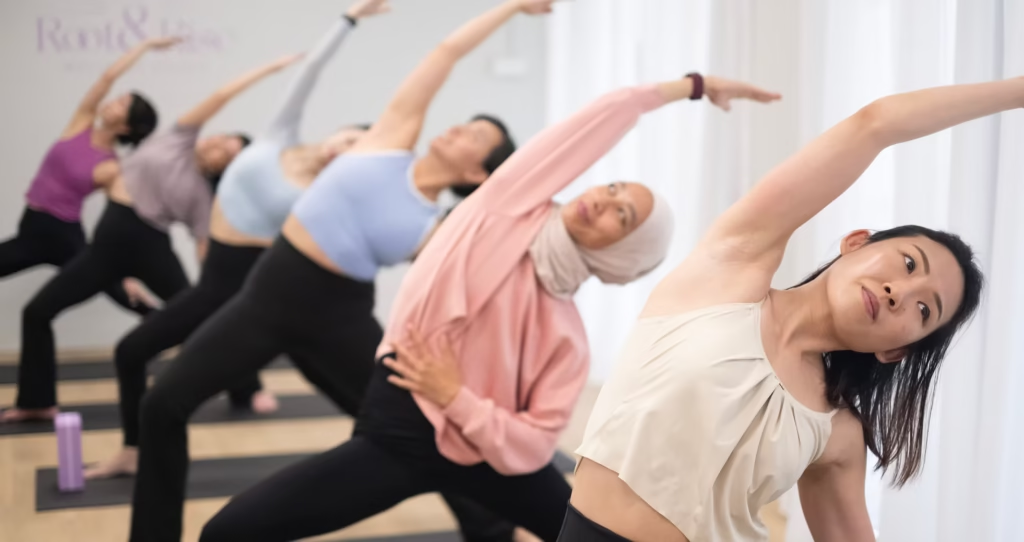
The enthusiasm for yoga among Singapore’s pregnant and postpartum population is understandable and well-founded. The evidence base supporting yoga’s benefits across the perinatal period, including reductions in pregnancy-related back pain, improved labour outcomes, better management of prenatal anxiety and postnatal depression, and accelerated functional recovery following delivery, is among the most consistent in the yoga research literature. What is less well served yoga classes Singapore landscape is the clinical precision needed to distinguish the practices that deliver these benefits safely from those that carry genuine risks for pregnant or recently delivered practitioners. The absence of clear clinical guidance, both in general wellness media and in some studio environments, creates a situation where well-intentioned practice can inadvertently produce harm.
This clinical framework is designed for practitioners and teachers who want to engage with perinatal yoga on the basis of accurate physiological understanding rather than general wellness enthusiasm.
The Physiological Context of Pregnancy That Determines Safe Practice Parameters
Pregnancy produces a cascade of physiological changes that fundamentally alter the risk-benefit calculation for physical practice. Understanding these changes is the prerequisite for making sound decisions about which yoga practices are appropriate at each stage of pregnancy.
Relaxin, the hormone that facilitates the ligamentous laxity needed for the pelvis to accommodate delivery, begins circulating from the earliest weeks of pregnancy and reaches its peak concentration in the first trimester. Its effects are not limited to the pelvic ligaments. Relaxin increases laxity in all ligamentous structures throughout the body, which means that every joint in the pregnant practitioner’s body is operating with less passive stability than it had before pregnancy. The practical implication for yoga practice is significant: the end ranges of joint motion that a pre-pregnant practitioner could safely explore with adequate muscular support become genuinely risky for the pregnant practitioner, because the ligamentous constraint that would normally prevent excessive range has been chemically loosened.
Hip opening postures that are performed with full passive range of motion exploration, deep forward folds that stress the sacroiliac joint, and any posture that takes joints to their end range through external pressure or gravity loading all carry elevated injury risk in the context of relaxin-related laxity. This remains relevant not only throughout pregnancy but through the postnatal period until breastfeeding is complete, since relaxin continues to circulate during lactation at levels above pre-pregnancy baseline.
The growing uterus creates additional constraints that change progressively through the second and third trimesters. Supine postures, those practised lying flat on the back, become contraindicated from approximately the second trimester onward because the weight of the uterus on the vena cava, the major vein returning blood to the heart, can impair venous return and reduce cardiac output to a degree that causes maternal hypotension and reduced placental perfusion. This is not a theoretical risk. Supine vena cava compression is a well-documented obstetric concern with measurable haemodynamic effects, and yoga practices that include extended supine postures in the second and third trimesters are not following current obstetric safety guidance.
Core loading postures require specific consideration. The rectus abdominis muscles separate along the linea alba during pregnancy to accommodate the growing uterus, a process called diastasis recti that affects virtually all pregnant women to some degree. Postures that load the rectus abdominis directly, including most crunch-type movements but also certain yoga postures that require significant anterior core engagement, can exacerbate diastasis and impair the functional recovery of the abdominal wall postnatally.
First Trimester Specific Considerations
The first trimester presents a particular set of yoga safety considerations that differ from those of the second and third trimesters and are often underappreciated. The risk of miscarriage, which is highest in the first trimester, creates a conservative approach to vigorous practice that most obstetric providers recommend during this period, not because moderate yoga is contraindicated but because distinguishing yoga-attributable complications from the spontaneous events of early pregnancy is diagnostically difficult and emotionally complex.
Overheating is a specific first trimester concern because of the neural tube’s sensitivity to elevated temperature during the period of its development and closure. Hot yoga formats, heated studio environments and any practice that raises core body temperature significantly are contraindicated in the first trimester for this reason. The embryological basis for this contraindication is well established, and it is a rare area of consistent agreement between obstetric providers and yoga teachers who have adequate clinical literacy.
Nausea, which affects a high proportion of first trimester practitioners, creates practical adaptations in class design. Inversions and postures that move the head rapidly through different orientations can exacerbate nausea significantly. Gentle, floor-based practices with minimal head movement are more appropriate during periods of significant first trimester nausea than dynamic standing or flowing sequences.
The Postnatal Return to Practice Framework
The postnatal period requires its own clinical framework that is distinct from the prenatal safety considerations and that is frequently collapsed into an oversimplified general timeline in studio and wellness media. The common guidance that practitioners can return to yoga at six weeks postpartum reflects the traditional obstetric check-up timeline rather than a physiologically derived assessment of readiness for specific types of practice.
The reality is that readiness to return to different types of yoga practice after delivery depends on several variables that a six-week calendar date cannot assess: the degree and recovery trajectory of perineal trauma, the functional status of the pelvic floor, the degree of diastasis recti and its response to conservative rehabilitation, and the overall physiological recovery trajectory of the specific individual.
Pelvic floor assessment by a physiotherapist specialising in women’s health is the most reliable basis for guiding postnatal return to yoga practice, and Singapore has a well-developed community of pelvic health physiotherapists whose assessment findings should inform studio practice decisions. Returning to postures that load the pelvic floor, whether through intra-abdominal pressure generation or through direct pelvic floor engagement, without this assessment risks exacerbating pelvic floor dysfunction that may otherwise have resolved with appropriate rehabilitation.
Core rehabilitation following diastasis recti requires specific programming that most standard yoga classes are not designed to provide. The postures and transitions that load the anterior abdominal wall in ways that challenge a healing diastasis, including many standard plank and downward dog variations, require modification or avoidance until core rehabilitation has progressed sufficiently to support them safely.
Studios like Yoga Edition that approach prenatal and postnatal programming with genuine clinical rigour, working with qualified women’s health practitioners to develop their prenatal class frameworks and ensuring their teachers understand the physiological basis for their safety guidelines, are providing a genuinely protective service to one of yoga’s most vulnerable and most enthusiastic populations.